

EU Summit Agrees on Financial Support for Ukraine Amid Ongoing Divisions
In the early hours of Friday, after a marathon 17-hour debate, EU leaders reached a historic agreement to provide Ukraine with €90 billion ($105 billion) in zero-interest loans. This financial package is designed to support Ukraine over the next two years, helping the country survive amidst the ongoing conflict with Russia.
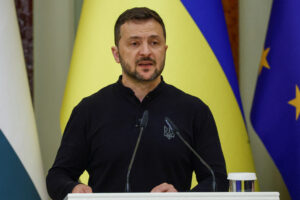
For Ukrainian President Volodymyr Zelensky, this aid was non-negotiable. Without it, he warned that Ukraine would not be able to pay its soldiers or purchase the necessary weapons to defend itself. As the US, under Donald Trump, shifted away from providing direct military assistance to Ukraine, the country has had to turn to its European neighbors for critical financial backing.
A Divided EU
The loan agreement was not easily reached. Hungary, Slovakia, and the Czech Republic only consented to the deal after securing an exemption from participation. Their reluctance highlights ongoing divisions within the EU, especially regarding the level of support each member is willing to provide to Ukraine. Hungary and Slovakia, both countries with closer political ties to Russia, have been less enthusiastic about supporting Ukraine’s defense than other EU nations, particularly Poland and the Baltic States.
Poland and the Baltic States see Ukraine’s success against Russia as directly tied to their own security. They argue that allowing Ukraine to collapse under the weight of financial strain would embolden Russia, putting all of Europe at risk. Polish Prime Minister Donald Tusk framed the decision facing EU leaders bluntly: “Pay money today, or pay in blood tomorrow.” His warning wasn’t just for Ukraine—it was for Europe’s future.
A New Path: Loans Over Frozen Russian Assets
Originally, the EU had explored using frozen Russian state assets, currently held within the EU, to fund Ukraine. However, fears of legal retaliation from Russia and potential damage to the EU’s reputation as a safe financial haven led to the abandonment of this idea.
Instead, the €90 billion loan will be backed by the EU’s common budget. EU officials have also suggested that, if a peace agreement is reached, the frozen Russian assets might eventually be used to help repay the loan.
The Bigger Financial Picture
While the €90 billion loan is a crucial step, Ukraine’s financial needs go beyond that. It is projected that Ukraine will need an additional €45 billion for the 2026-2027 period to maintain its operations and continue its defense. To cover some of this, the EU is hoping that other global allies, such as the UK, Canada, and Japan, will step in and offer financial support.
Moreover, the EU loan also opens up new possibilities for Ukraine to access international financial institutions, such as the IMF, providing further funding avenues to keep the country operational as it fights on the battlefield.
What’s Next for Ukraine?
The EU’s decision to approve the €90 billion loan significantly eases Ukraine’s financial pressures for the next two years, giving it the funds necessary to continue its defense efforts. But the broader challenges remain—how to secure long-term financial stability, how to deal with the frozen Russian assets, and how to balance the diverse political interests of EU member states, especially when it comes to supporting Ukraine’s war effort.
In the end, the summit underscored both Europe’s commitment to Ukraine and the internal tensions that have come with such a large-scale financial commitment. With the war still raging, it’s clear that the EU’s role in supporting Ukraine will be pivotal to the country’s survival—and to the future of European security.